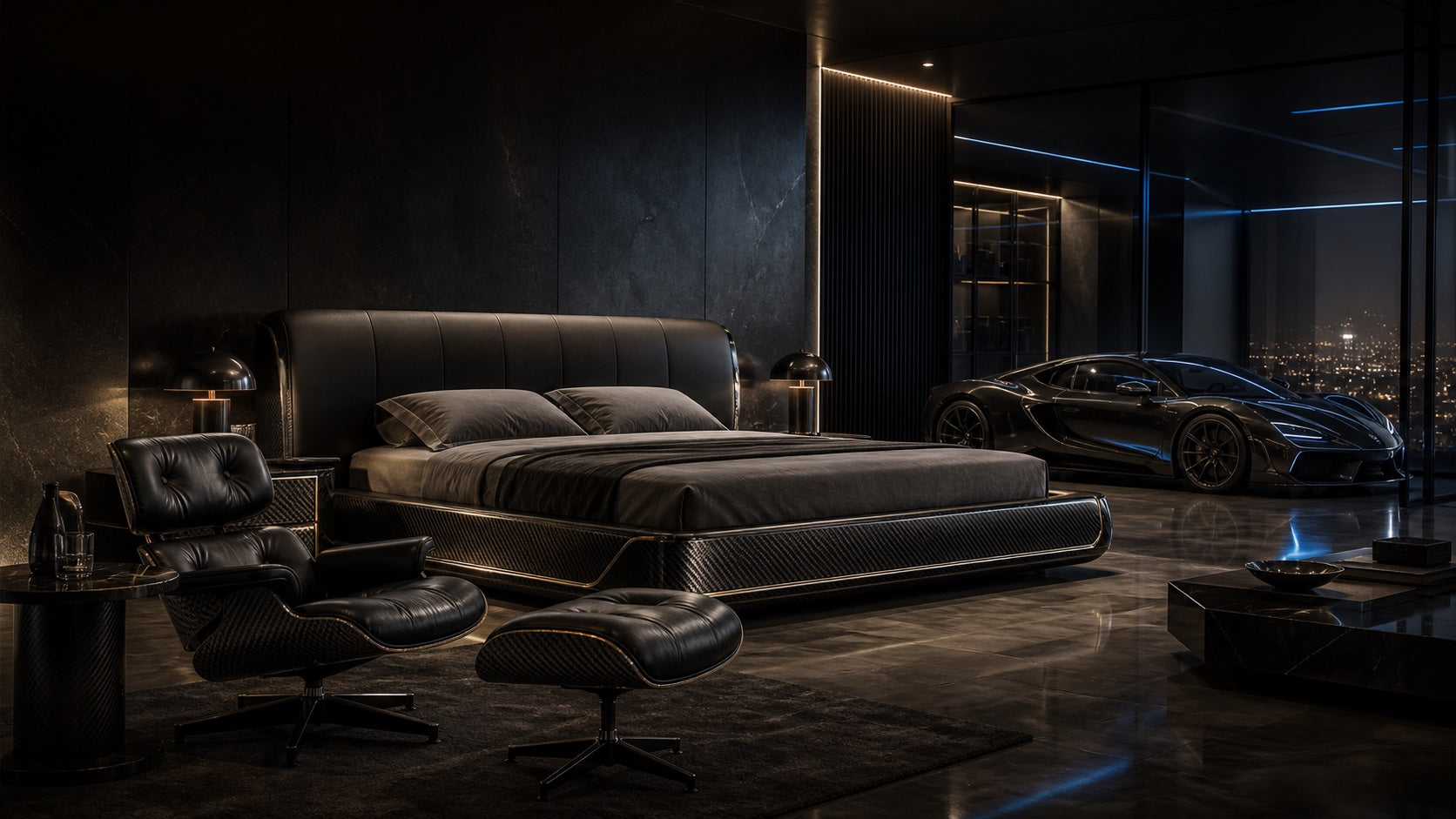
Carbon fiber is not the first material most people associate with residential furniture, but it can be a strong fit for premium interiors when the design calls for sculptural form, light weight, and technical precision. In luxury homes, hotels, and villa projects, a carbon fiber lounge chair can work as both a visual statement and a practical seating solution.
The value is not only in the material. It is in the way structure, finish, comfort, and manufacturing control come together. Since 2008, Aolante / Fubang Living has developed custom furniture with more than ten years of technical R&D, high-quality imported wood, and overseas advanced equipment. Learn more on the About Us page and review available documentation on the Certifications page.
Why Carbon Fiber Works in Premium Seating
Carbon fiber offers a distinct set of advantages when used thoughtfully in luxury furniture. It is light, strong, and visually precise, which makes it useful for shaped shells, slim structures, and seating concepts that need a contemporary edge.
- A refined sculptural silhouette
- Reduced weight for easier handling and installation
- Strong structural performance in specific design applications
- A modern visual language that pairs well with stone, leather, wood, and textile finishes
That does not mean carbon fiber should be used everywhere. In a premium interior, the best result often comes from balance. A chair may feature a carbon fiber shell or support element while still using upholstery for comfort and warmth.
How a Factory-Direct Process Improves the Result
When furniture moves through several middle layers, important details can get diluted. Factory-direct development keeps the designer, buyer, and maker closer to the real product.
Better control over structure
The factory can determine where carbon fiber adds value and where other materials are better suited. A shell, base, or support element may benefit from carbon fiber’s strength, while seat cushions and contact surfaces may need textile or leather upholstery for comfort.
More practical sampling
Sampling should test proportion, comfort, finish, and handling, not just appearance. A careful sample helps the team refine shell angle, seat depth, and cushion thickness before production.
Faster feedback on technical trade-offs
If a design is too wide, too low, or too complex to manufacture efficiently, a factory-direct partner can raise that issue early. For projects that need a coordinated seating language, explore the Carbon Lounge collection.
What Luxury Projects Should Ask Before Specifying the Chair
Whether the project is a hotel suite, a villa lounge, or a private residence, the specification process should be clear from the beginning. A strong brief usually includes:
1. Intended use
Is the chair for a reading corner, a lobby, a suite, a private study, or a feature space? The answer affects comfort level, durability, and finish selection.
2. Material mix
Carbon fiber may be paired with upholstered surfaces, wood details, or metal accents. Ask how the factory balances visual lightness with tactile comfort.
3. Maintenance expectations
Luxury interiors still need practical care, especially in hospitality settings where frequent use is expected.
4. Shipping and installation
Even a light chair can become difficult to manage if packaging, dimensions, or assembly are not planned properly. Confirm carton size, protection level, and site access early.
5. Batch consistency
If the chair will be ordered in multiple phases, check how the manufacturer maintains finish and upholstery consistency between production runs.
Where Carbon Fiber Fits Alongside Other Signature Pieces
A luxury interior rarely depends on one hero object. The best projects use a consistent material language across several items. A carbon fiber lounge chair can sit beside a tailored bed, a sculptural side piece, or even pet-friendly furniture as long as the design logic is coherent.
For bedroom-focused projects, the Signature Beds collection is a useful reference point for how premium proportions and refined detailing can shape the tone of a space.
For pet-inclusive interiors, the Pet Atelier collection shows how the same design mindset can extend into companion furniture without making the room feel compromised.
That cross-category consistency is one reason designers often prefer working with a manufacturer that can support more than one product type.
Quality Systems and Responsible Sourcing Still Matter
Material innovation should not replace basic supplier discipline. Buyers should still review the manufacturer’s quality and compliance documentation before moving forward. Depending on the project and the current documents available, relevant materials may include ISO management system certificates, FSC-related documents, and amfori BSCI assessment materials.
Aolante / Fubang Living maintains company and factory documents that buyers can review during project evaluation, but each document should always be checked for the legal entity, scope, and validity period that applies to the specific order. The Certifications page is the right starting point for that review.
For premium projects, documentation should be paired with a clear inspection plan.
Best-Fit Project Types
Carbon fiber lounge chairs are not a universal answer, but they are a strong option in several settings:
Hotel projects
Hotels need furniture that is visually distinctive and operationally sensible. A carbon fiber chair can create a memorable seating moment in a suite, lobby, or private lounge.
Villas and private residences
In villas and custom homes, the piece can be used as a personal statement object. It works well where the client wants something more directional than a standard lounge chair but still expects comfort and long-term usability.
Brand-led interior concepts
When a designer or developer wants a signature look across multiple rooms or properties, carbon fiber can provide a recognizable thread without repeating the same object everywhere.
How to Evaluate a Manufacturer
Before starting a project, ask the supplier to explain:
- How the carbon fiber element is engineered
- Which parts are structural and which are decorative
- What upholstery options are available
- How sample approvals are handled
- What quality checks happen before packing
- Whether the factory can support related pieces such as beds or pet furniture
If the answer is vague, the risk usually moves downstream into production. If the answer is clear, the supplier is more likely to handle custom work responsibly.
Conclusion: Use the Material Where It Adds Real Value
A carbon fiber lounge chair can be an excellent choice in a luxury interior, but only when the material serves a clear design and functional purpose. The best results come from a factory that can balance structure, comfort, finish, and project coordination rather than treating the material as a novelty.
For Aolante / Fubang Living, that usually means starting with a focused brief, reviewing the available documentation, and checking whether the chair fits the wider furniture language of the project. If the interior also needs beds, lounge pieces, or pet-friendly items, a coordinated sourcing approach can help the whole space feel more deliberate.
To discuss dimensions, finishes, quantities, or project requirements, start with the About Us page and the Certifications page, then use the relevant collection pages to align the product direction.
Frequently Asked Questions
What is a carbon fiber lounge chair used for?
A carbon fiber lounge chair is typically used in premium interiors where the design calls for a sculptural shape, lighter handling, and a more technical material expression. It can work in hotels, villas, private homes, and brand-led spaces.
Is carbon fiber always the main visible material?
No. In many furniture designs, carbon fiber is used for a shell, support element, or structural detail while upholstery, wood, or metal provide comfort and visual balance.
Why would a buyer choose factory-direct seating?
Factory-direct sourcing improves communication, makes sampling more practical, and helps buyers manage structure, finish, packaging, and delivery with fewer intermediaries.
Which documents should buyers review before ordering?
Buyers should review the current documents that apply to the specific supplier and order, including the legal entity, scope, and validity period. Relevant materials may include ISO, FSC-related, and social compliance documents where available.